‘Key Selling Point’ Modules on Google Store pages
Introduction —
I proposed a reusable framework for Key Selling Point modules, the primary component used in Google Store Product Detail pages to inform and educate users about products. The KSP module is integral to persuading customers to convert early in the purchase funnel.
Role, Duration, Platform —
Design Lead, 3 months, Web
Team —
UX Manager, Engineering, Publishing, G2M, and Creative Teams
Contribution —
UX Design, Product Strategy, Visual Design, XFN Leadership
Problems —
Business: KSP modules were increasing business costs and resourcing due to their custom and bespoke execution per product launch.
Users: Users were struggling to differentiate products amongst Product Detail Pages because KSP modules appeared too similar.
Context —
• UX team historically not a stakeholder of marketing pages
• Significant tension between Marketing and Engineering teams: Build
pages using Reusable vs. Non-reusable components
• No requirements provided or defined
Outcomes —
⭐️ Defined a scalable content strategy and component framework
approach that is still used 4 years later
⭐️ Critical page strategy alignment amongst XFN teams
⭐️ Increased internal workflow efficiency among XFN teams
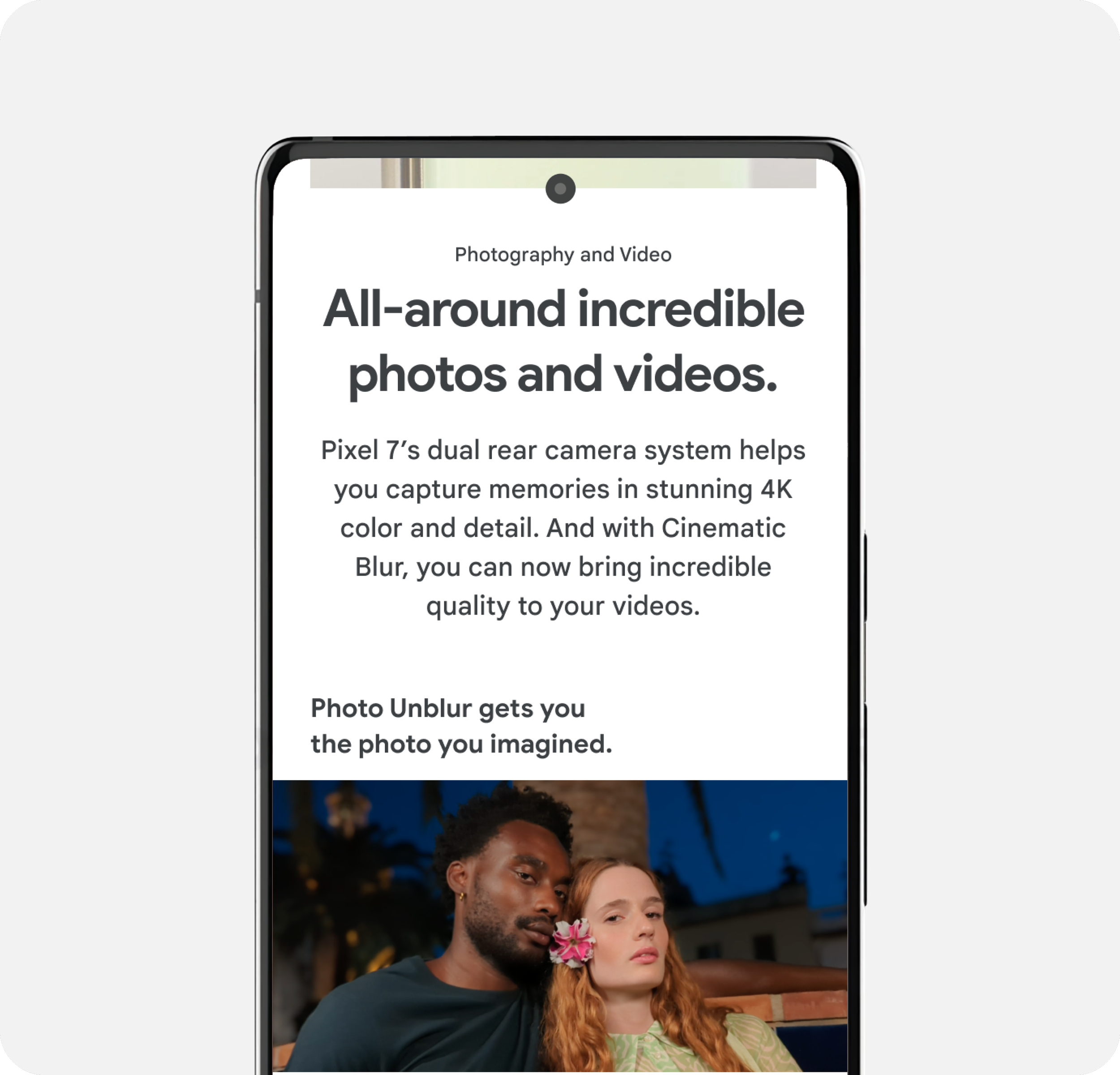
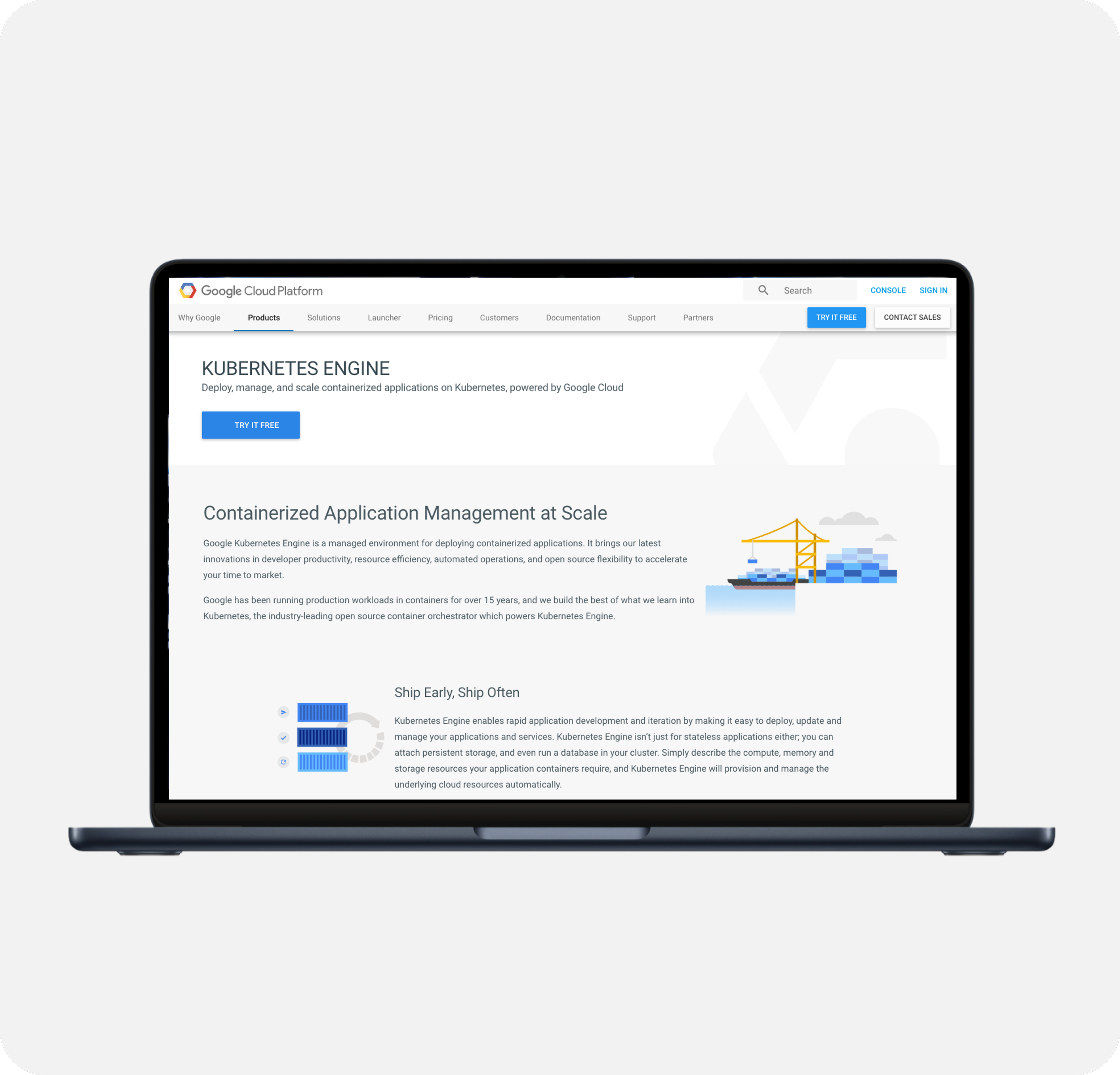
Original KSP Module

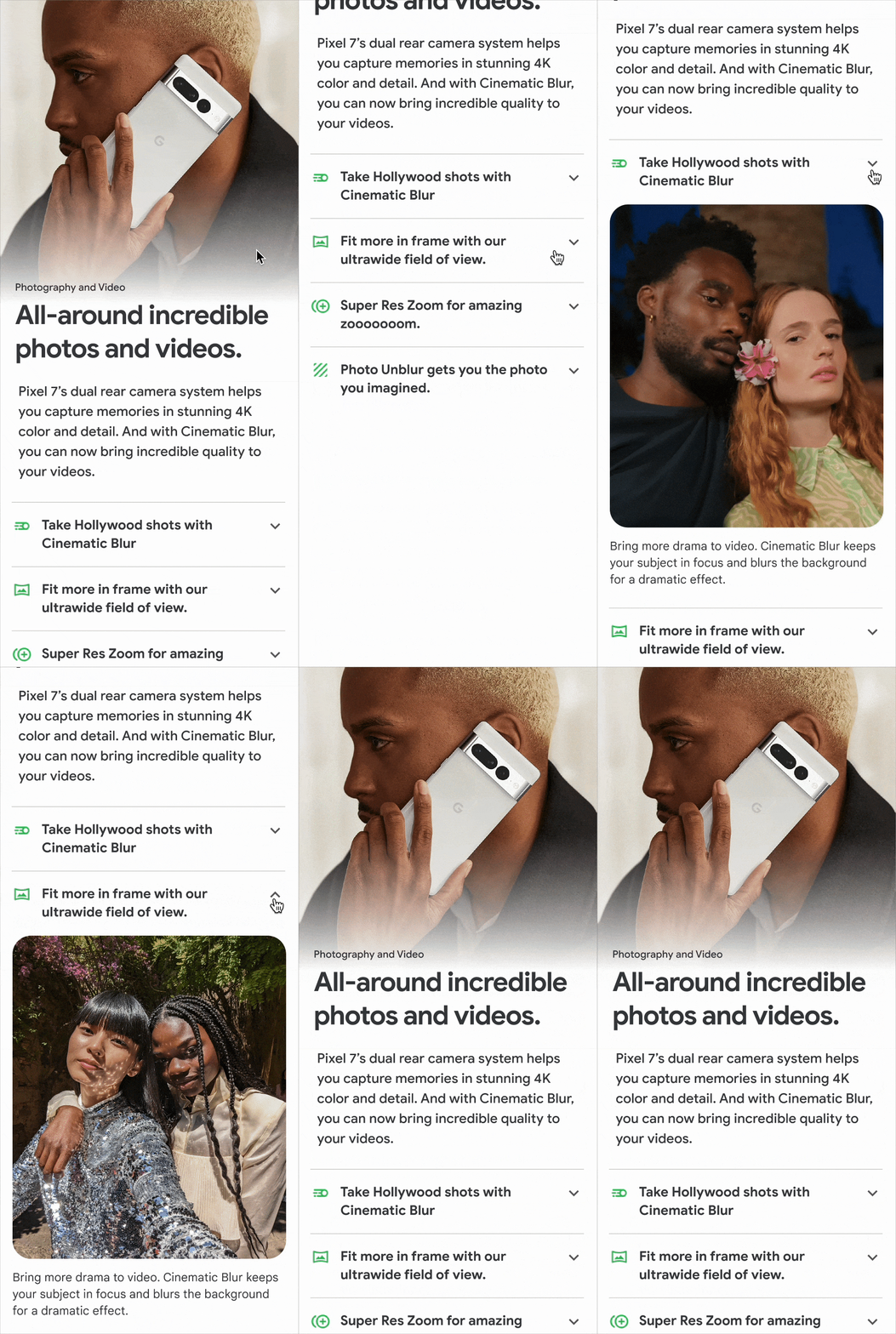
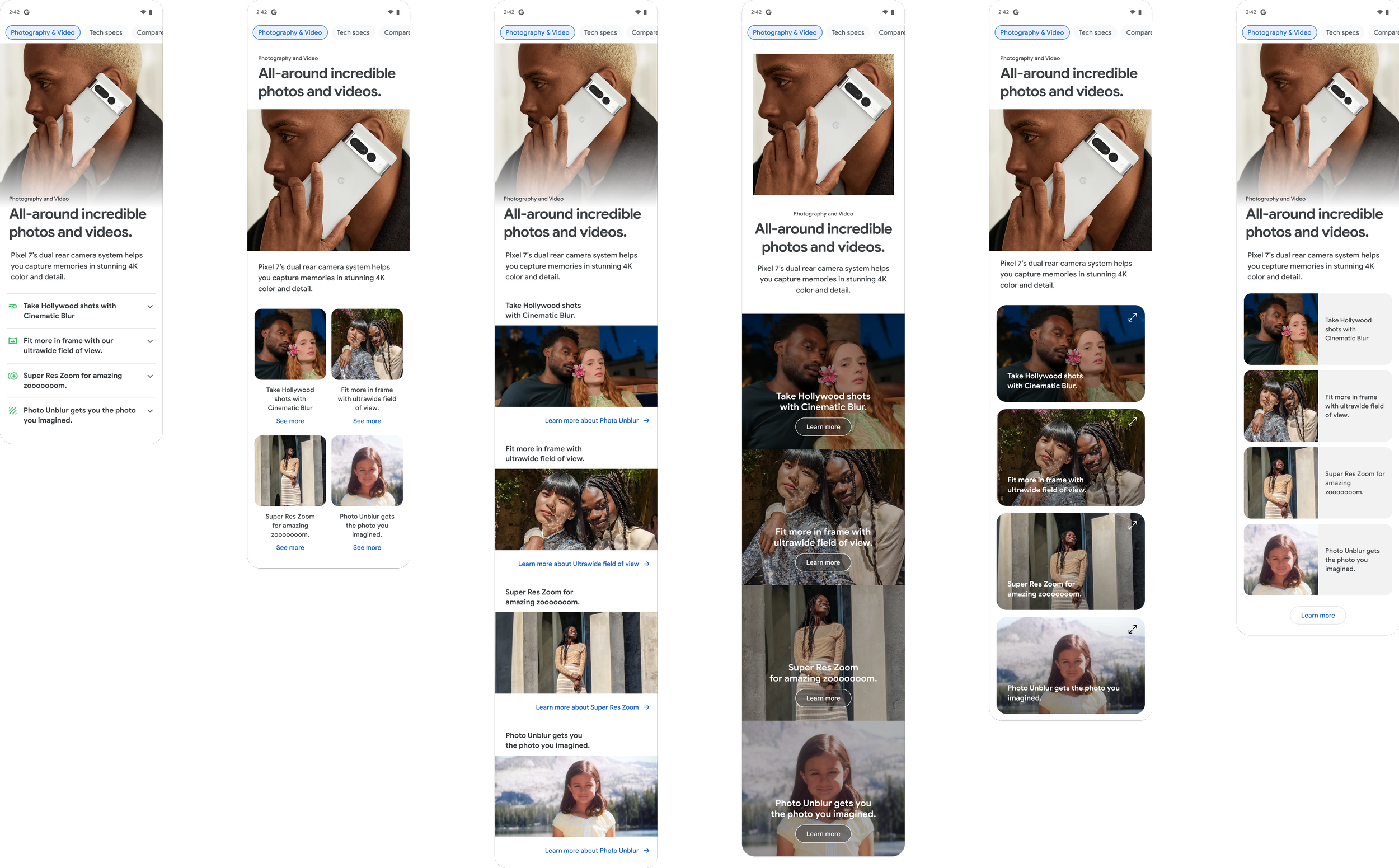
Example KSP Modules using proposed framework


Process Highlights —
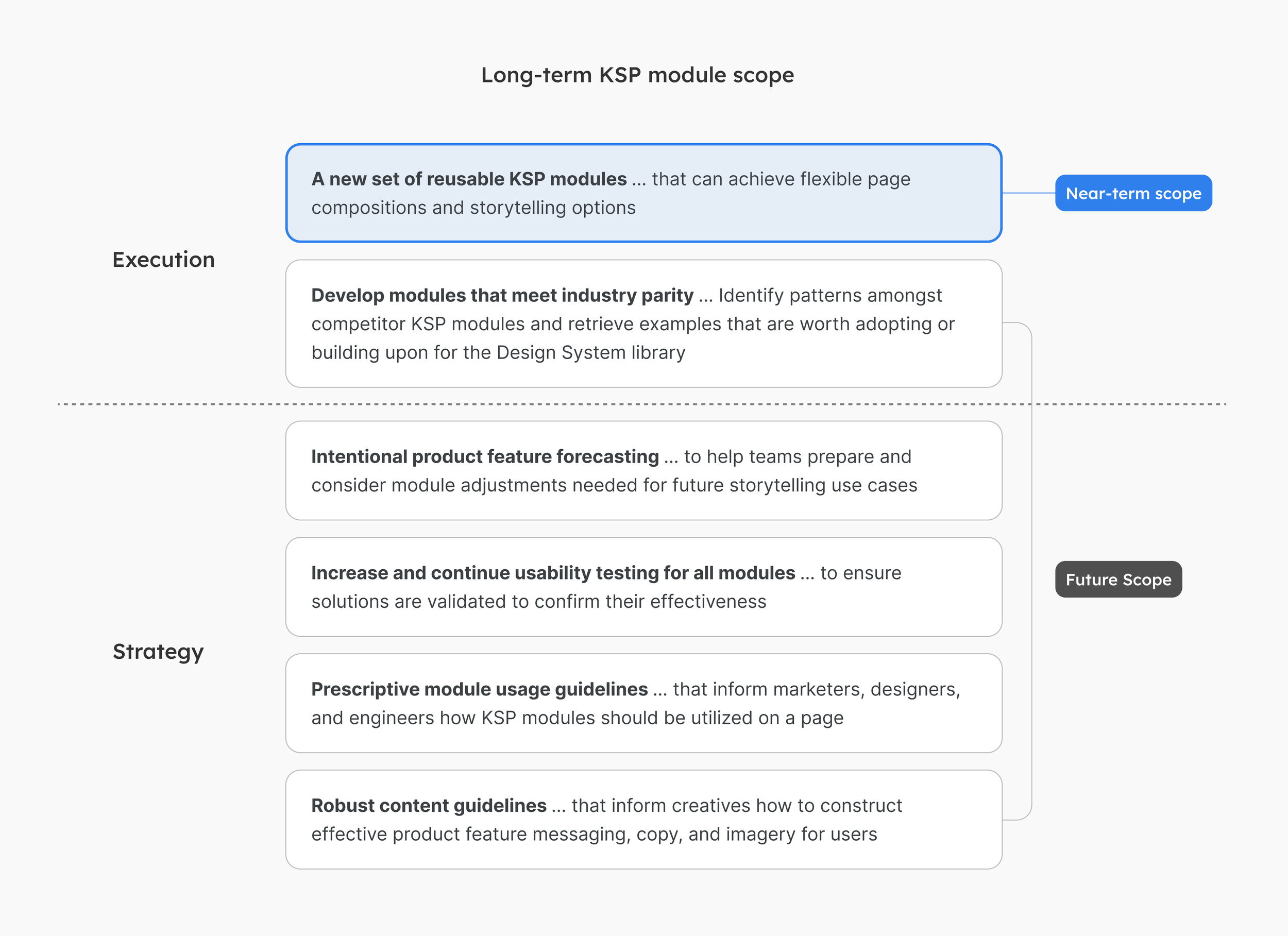
I conducted extensive XFN interviews, competitive analysis, and internal audits to uncover a more holistic project scope and develop my own near-term requirements
Process Highlights —
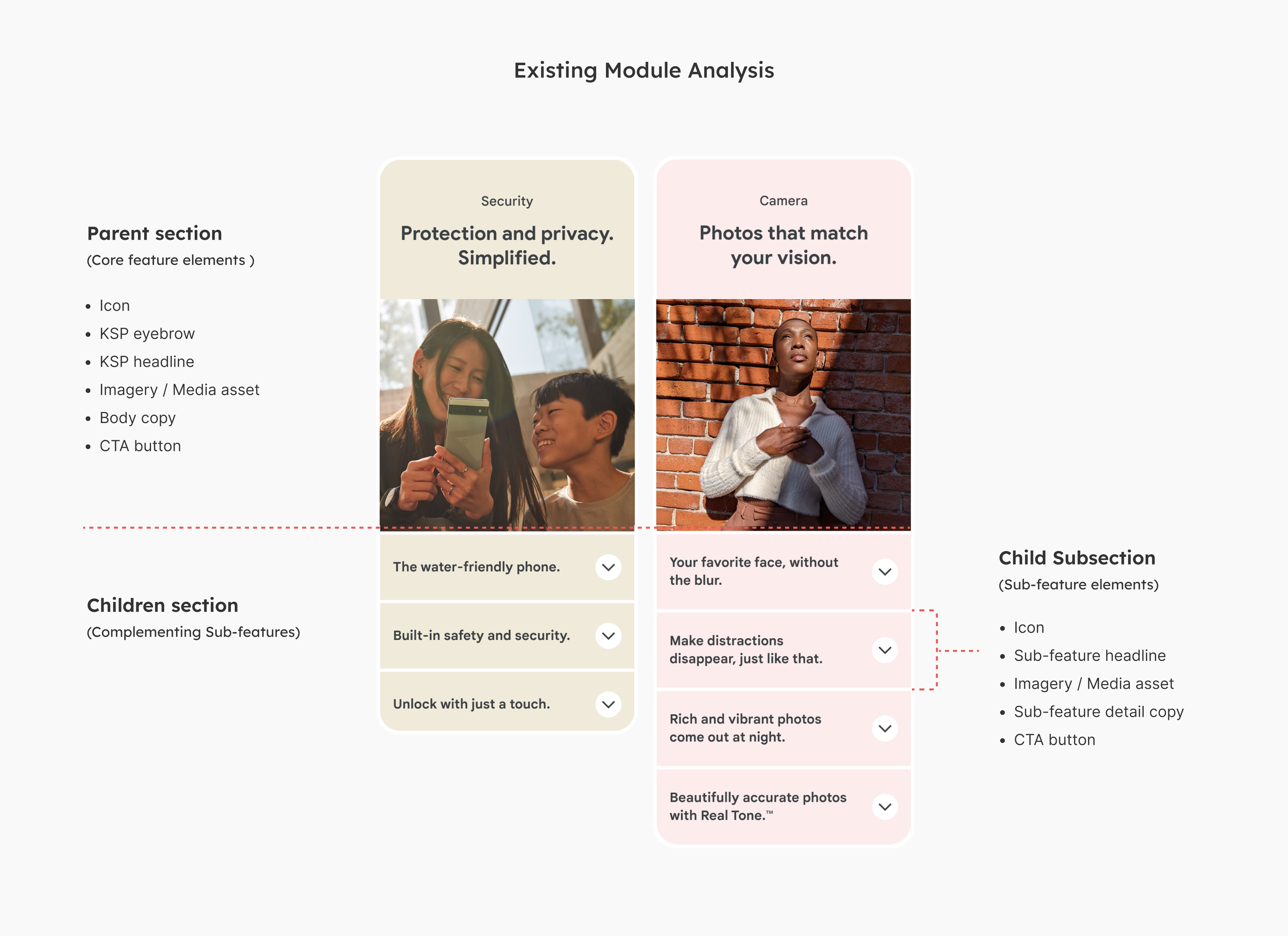
I examined old and current KSP modules to understand product messaging patterns to further inform requirements
I discovered a consistent parent-child information anatomy that established a foundational solution base for my proposal
Process Highlights —
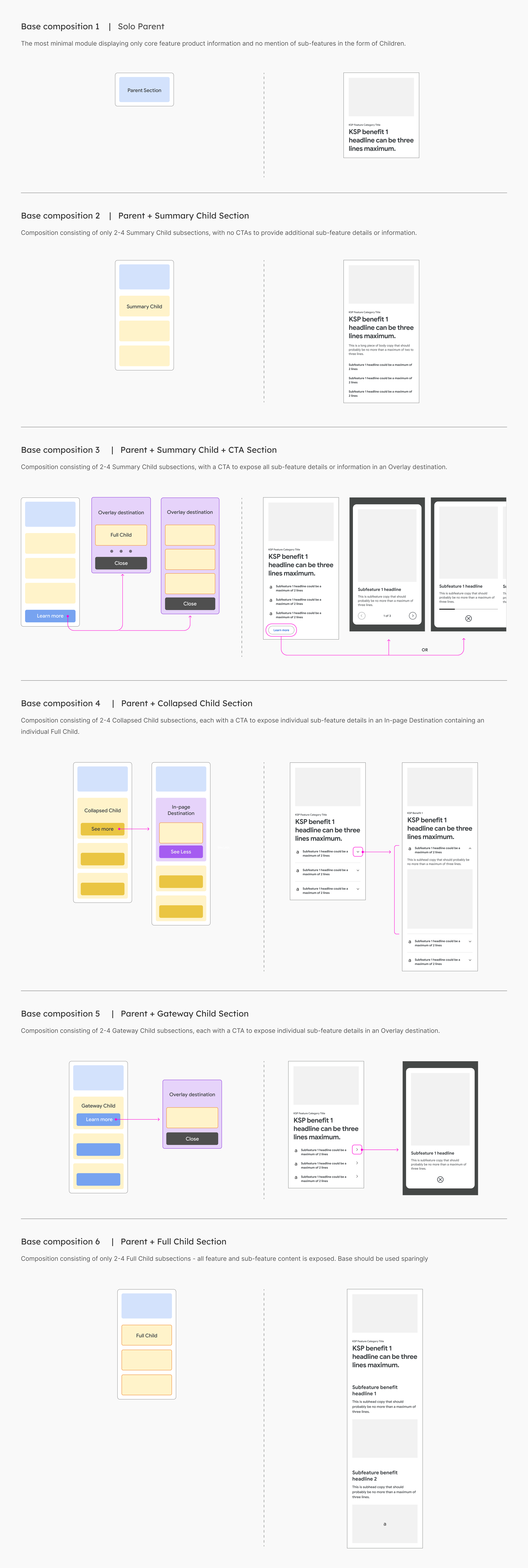
I arrived at an initial module framework that consisted of 6 versatile compositions that created page flow flexibility and more options for product storytelling
Solution
In combining different iterations of each base composition, product detail pages could achieve a great amount of visual variation and differentiation. Below are examples of how the same KSP content could appear, utilizing differing base compositions.
Result
This solution garnered excitement from many of our stakeholders given the current amount of resources dedicated to conveying KSPs. But, because a solution like this required alot of coordination, the fruits would not be evident for at least another year.
Given the trajectory of it’s impact, program managers estimated a significant reduction in engineering and overall marketing efforts by the end of 2024.
Next steps
Largest issues in development:
Stress-testing the scalability of the system
Build timelines for eventual delivery
System terminology
Parallel desktop iterations
Base module concepts
Content guidelines and scope
Module usage rules and guidance
KSP tier methodology
Reusable motion property scope and feasibility
Visual design
Creative asset considerations
-
![]()
AI Sleep Stories for Kids
-
![]()
Key Selling Point Modules
-
![]()
Product Detail Pages
-
![]()
Promotion Management
-
![]()
Google Store Design System
-
![]()
Google Cloud Imagery Refresh
-
![]()
ESPN App - Gamecast