Promotion Management on Google Store CMS
Introduction —
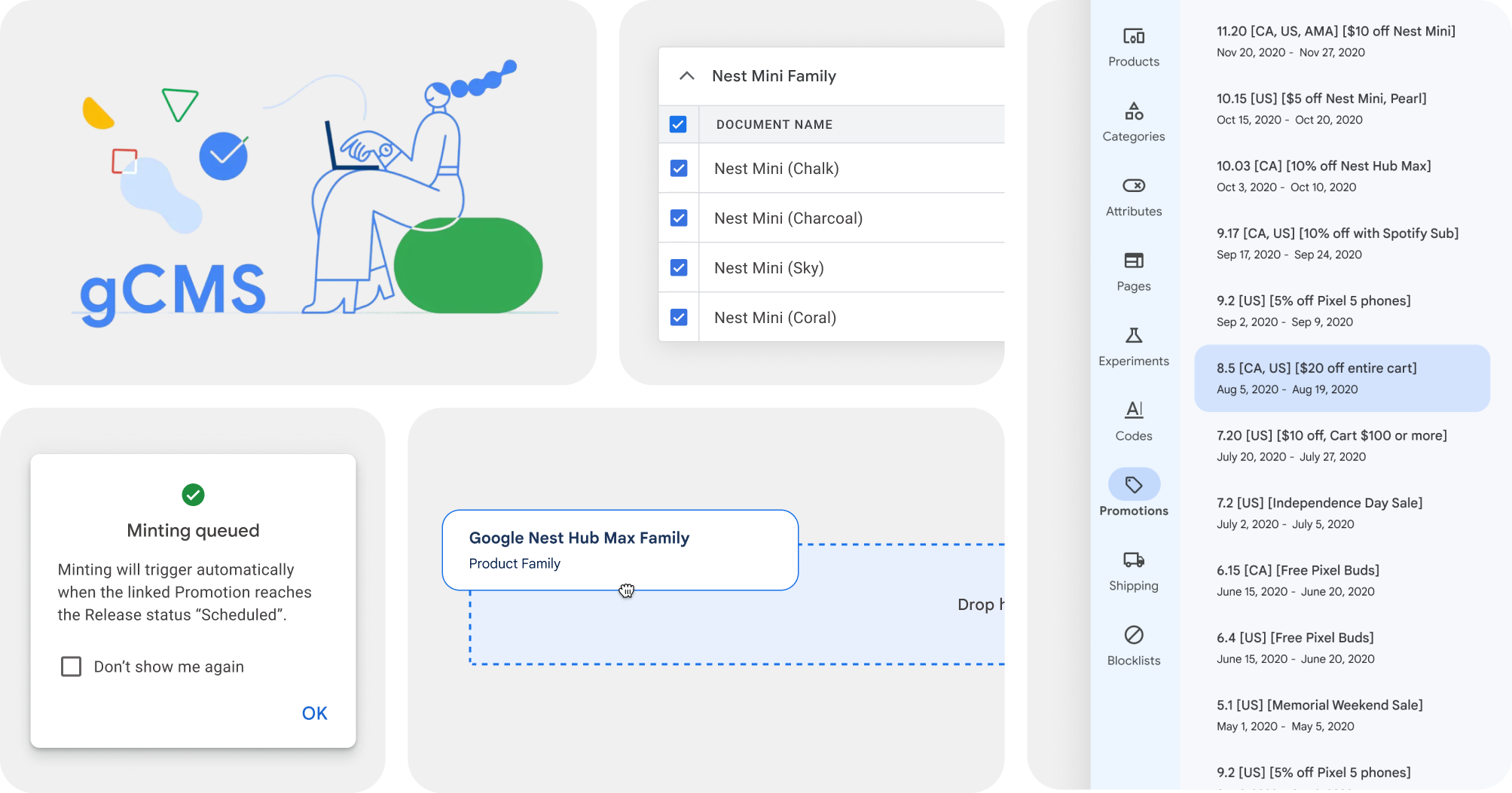
I designed the Promotions management system on gCMS, Google Store’s native content management system. I solved for how marketing promotions would be managed, scaled, and evolve with the business’ increasing objectives and needs.
Role, Duration, Platform —
Co-UX Lead, 6 months, Internal CMS
Team —
UX Designer, UX Manager, 3 Engineers, 4-Member Publishing Team
Contribution —
UX Design, Visual Design, User Interviews and Validation, XFN Collaboration
Problem —
Google Store was unable to scale promotion opportunities because the existing CMS was dated. Catalog publishers could not create, manage, and deploy the business’ desired volume of promotions efficiently.
Context —
GCMS was in its third year of development, attempting to reach parity and existing functionality with its legacy systems
The original system was a collection of many separate systems
Outcomes —
⭐️ Reduced the number of required catalog publishers from 4 to 2
⭐️ A scalable framework that evolved a dated system
⭐️ Increased overall workflow efficiency through tool, task, and
document consolidation
Core Flow —
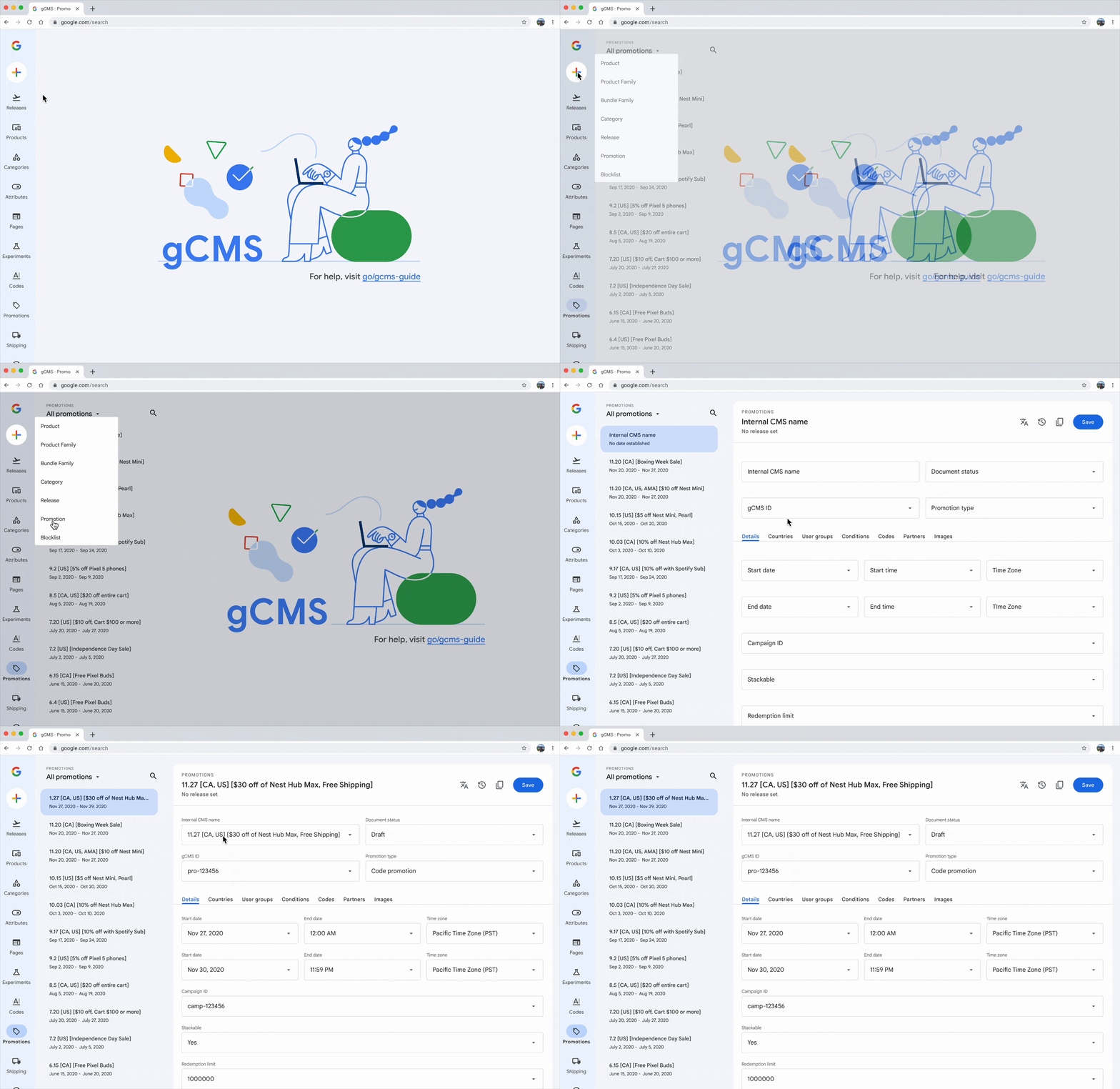
Creating a promotion simply meant starting a gCMS document, with required tasks consolidated by default
Core Flow —
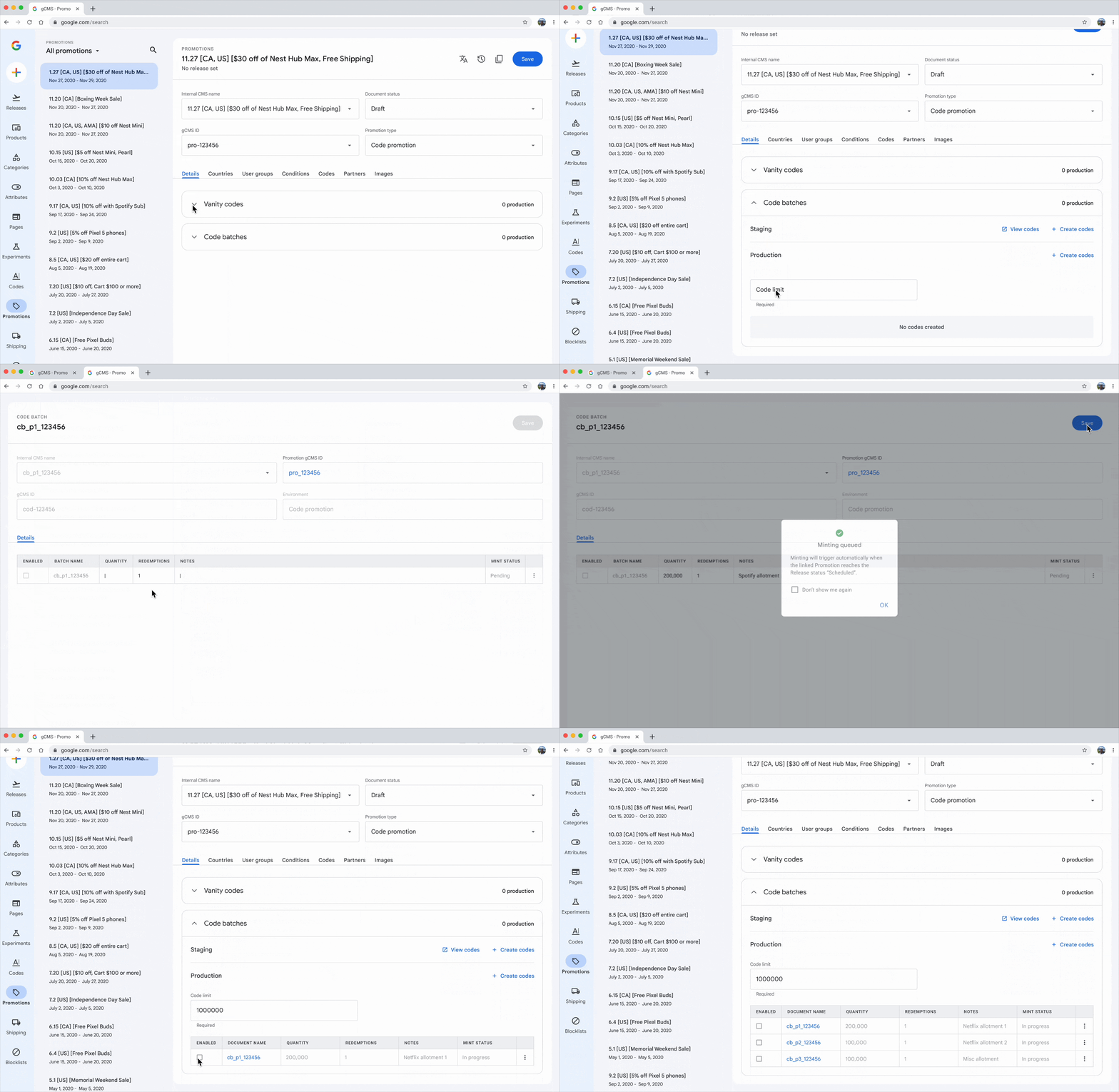
Code management, including vanity and code batches, was merged into 1 front-end location rather than 4 disparate backend systems
Core Flow —
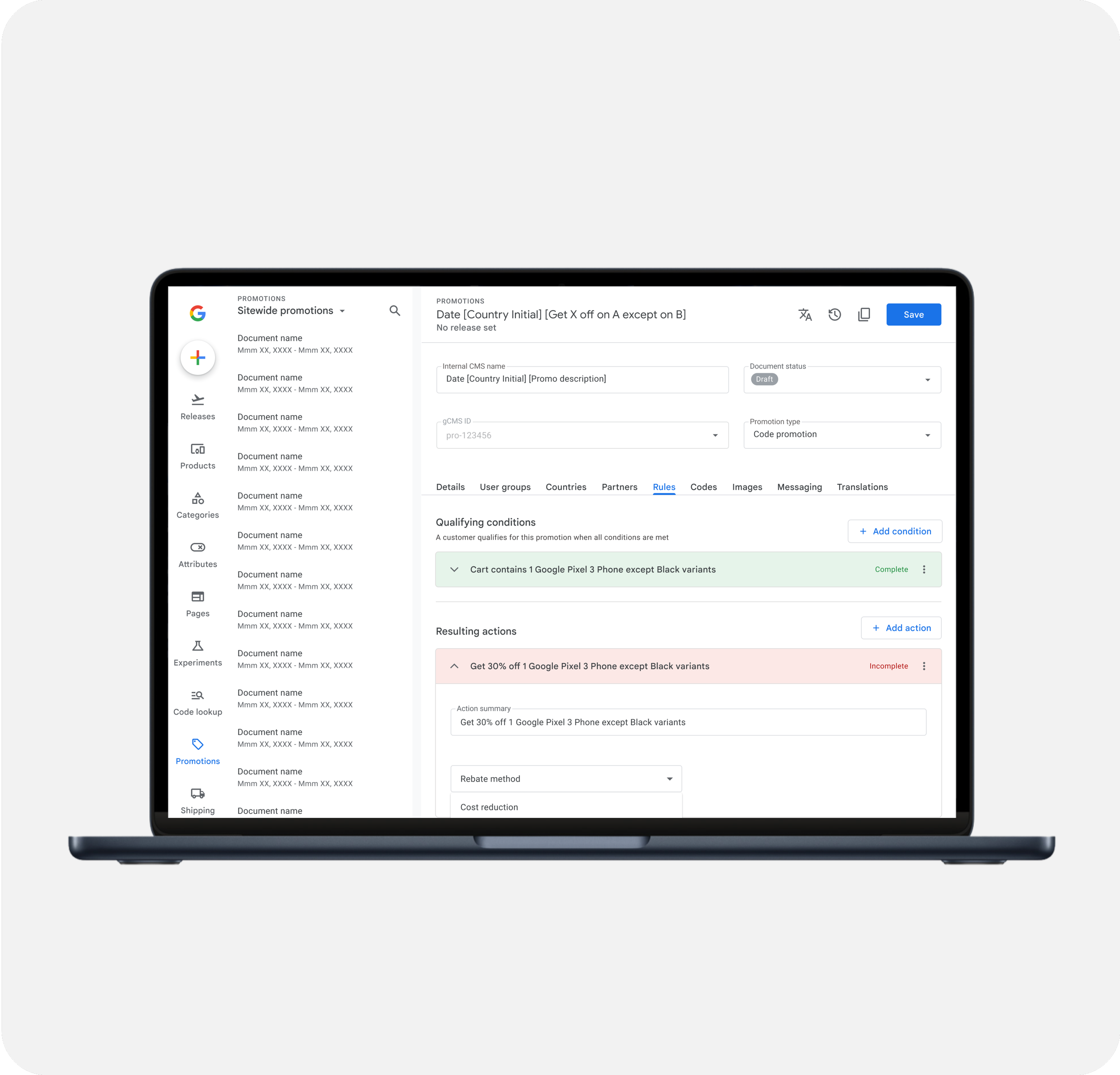
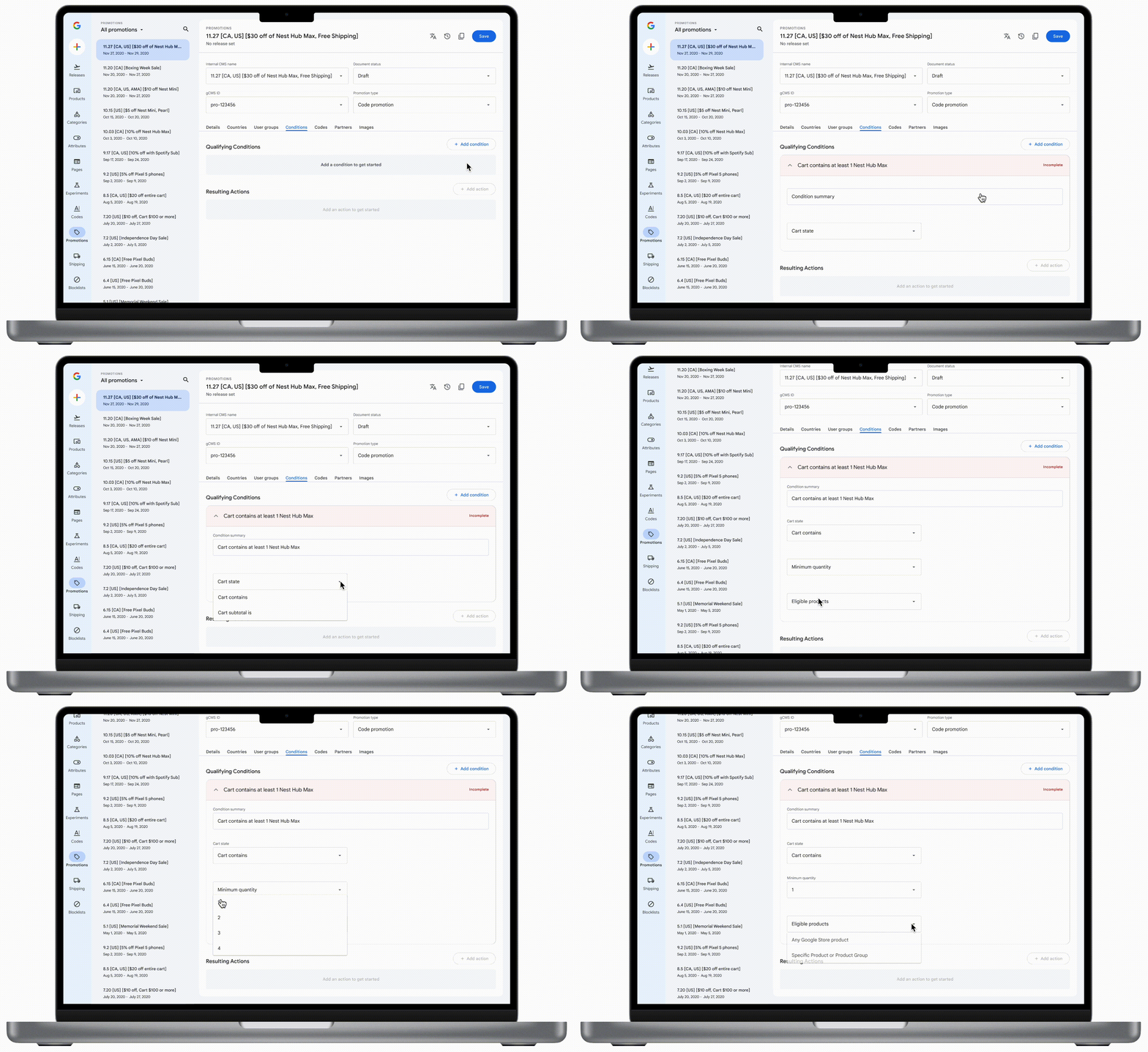
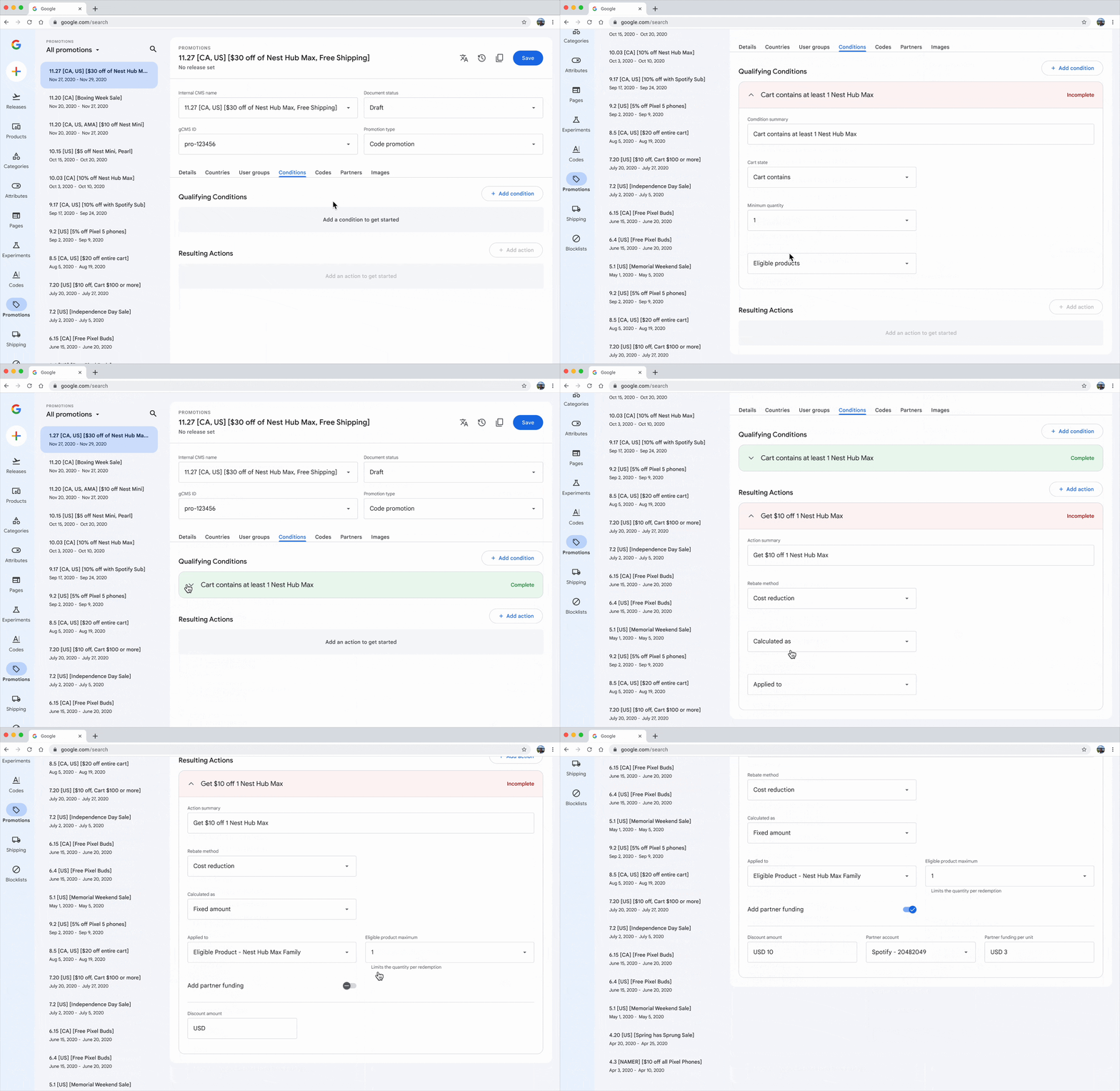
A discount rule creation flow and UI designed to be understandable and easy to build despite their technical and complex nature
Result
Although launched in phases over a span of 9 months, the addition of promotions management to the gCMS platform had a sizable impact, largely on operator workflow efficiency. Product managers reported a significant increase in promotion deployment in 2021, with less user publisher resourcing needed compared to past launches.
Next steps
It was a monumental feat to have such a robust MVP that could very well last for multiple quarters. But, there were still many areas that required clean up before UX could even impact a V2. Some outstanding items included:
Engineering partners to continue consolidating environments to reduce unnecessary friction that added to the user experience
Import spreadsheet functionality to remove final piece of manual input work
Finding a way to view Staging code batch names on the interface
Scaling Rule set functionality to accommodate discount stacking
-
![]()
AI Sleep Stories for Kids
-
![]()
Key Selling Point Modules
-
![]()
Product Detail Pages
-
![]()
Promotion Management
-
![]()
Google Store Design System
-
![]()
Google Cloud Imagery Refresh
-
![]()
ESPN App - Gamecast